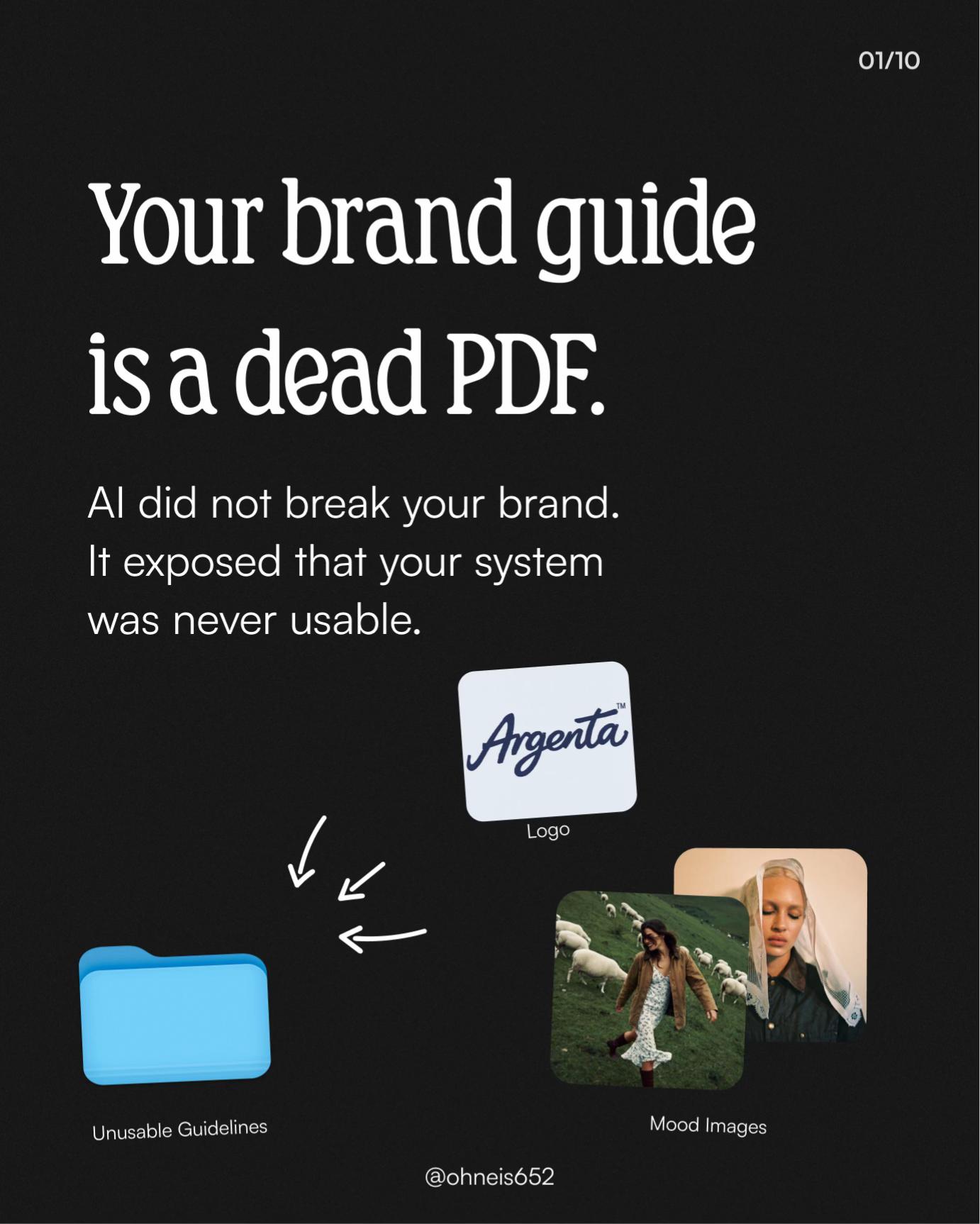
The gap between a PDF brand guide and a system AI can actually use is where most brand consistency problems start.
You approved the brand guide. It has the logo in all its variants, the colour hex codes, the approved typefaces, a few lifestyle mockups showing the brand in context. Your design team knows where it lives. Your agency has a copy. When a new freelancer comes on, someone sends them the PDF.
That process made sense when every creative asset passed through a human who had absorbed your brand over time. It doesn’t hold up when you’re running AI tools to produce social content, ad variants, motion graphics, or product visuals at any real scale.
AI doesn’t absorb. It reads what you give it, and if what you give it is a PDF in a shared drive, you’re going to get output that’s technically on-brand in the loosest sense and obviously off-brand in every other way.
What AI actually needs from your brand
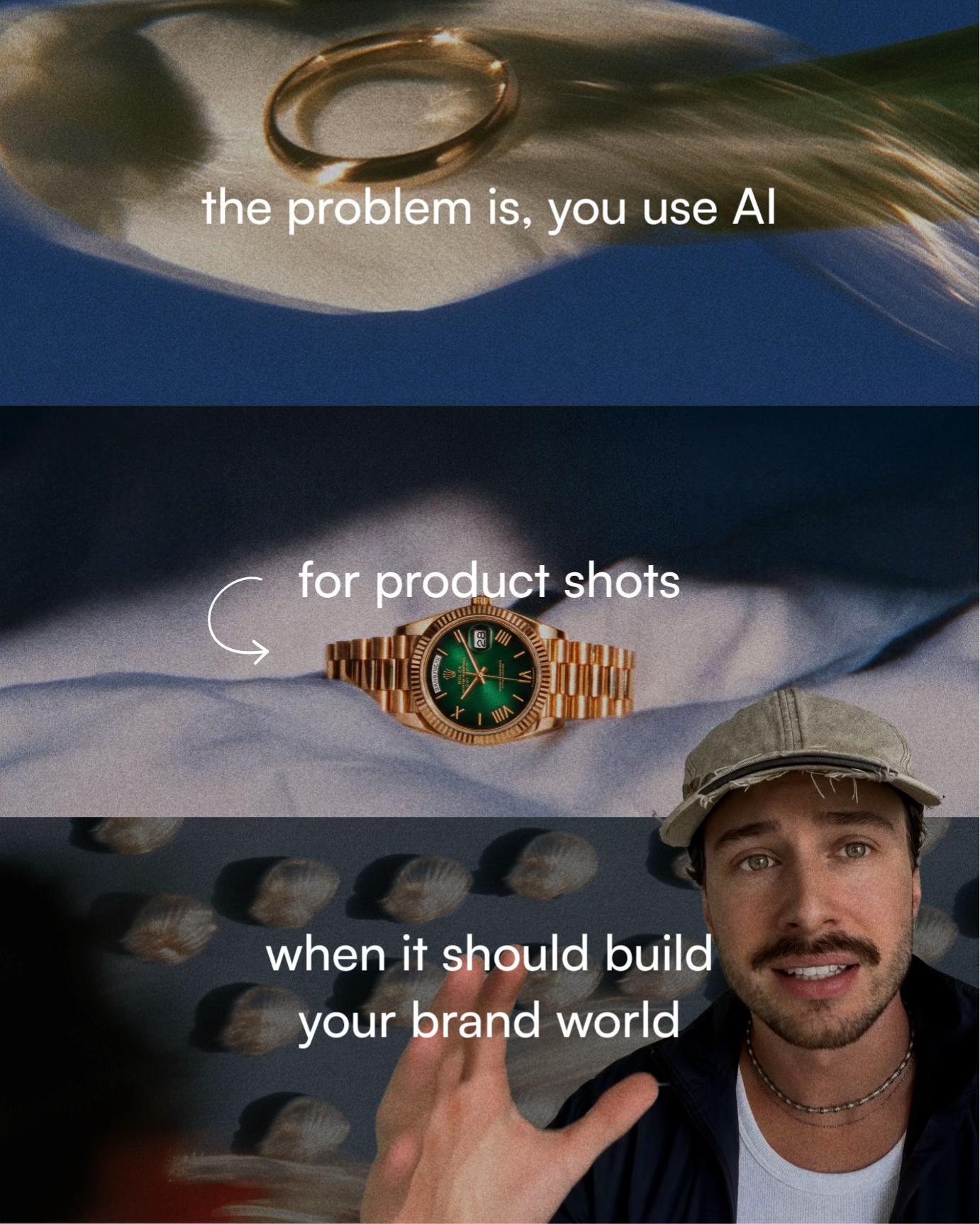
The difference between AI creative that looks like your brand and AI creative that looks like everyone else’s comes down to how your brand is structured as a system, not a document.
A system means:
Organised visual reference folders your tools can actually pull from, not a mood board someone made in 2021.
Tested prompts that reliably produce on-brand output, with the failures already filtered out.
Motion rules that define how your brand moves, not just how it looks.
Explicit forbidden styles. Knowing what your brand should never create is as useful as knowing what it should.
AI-ready brand context, written the way a language model reads, not the way a creative director presents to a client.
None of this is about which AI tool you’re using. It’s about whether your brand is structured clearly enough for any tool to understand it.
The consistency problem most teams don’t diagnose correctly
When AI-generated content looks inconsistent, the instinct is to blame the tool, or the person prompting it, or the fact that AI just isn’t good enough yet. Sometimes those diagnoses are right. More often, the real issue is upstream.
“
A PDF in a random folder is not a workflow. The new brand guide is a system.
A PDF in a random folder is not a workflow. The new brand guide is a system.
If your brand exists as a collection of files that haven’t been organised for machine use, then every time someone generates creative output, they’re effectively starting from scratch. There’s no accumulated brand memory. The AI has no way to connect this asset to the last fifty assets you approved.
That’s not a creative problem. It’s an infrastructure problem. And it’s fixable.
What a properly structured brand system looks like
The brands getting consistent, fast creative output share a few things in common. Their visual references are curated and organised, not just collected. Their prompts have been tested and documented, so the team isn’t reinventing the approach for every project. Their Figma files are structured for reuse, not just presentation. And someone with genuine creative judgement has made deliberate decisions about what the brand will never do, not just what it will.
That last point matters more than it sounds. Forbidden styles, explicit exclusions, defined anti-patterns, these are often what separates a brand system that produces consistent output from one that keeps drifting. Constraints are a form of structure. Structure is what makes speed possible without sacrificing coherence.
Building this kind of system is not a one-afternoon task. It requires someone who understands both brand craft and how AI creative tools actually process information. That combination is rarer than either skill on its own, and it’s what makes the difference between a brand that can run creative at scale and one that keeps producing expensive, inconsistent one-offs.