Why most AI product visuals don't compound into anything
Generating faster is not the same as building a visual system, and the revenue gap between the two is measurable.
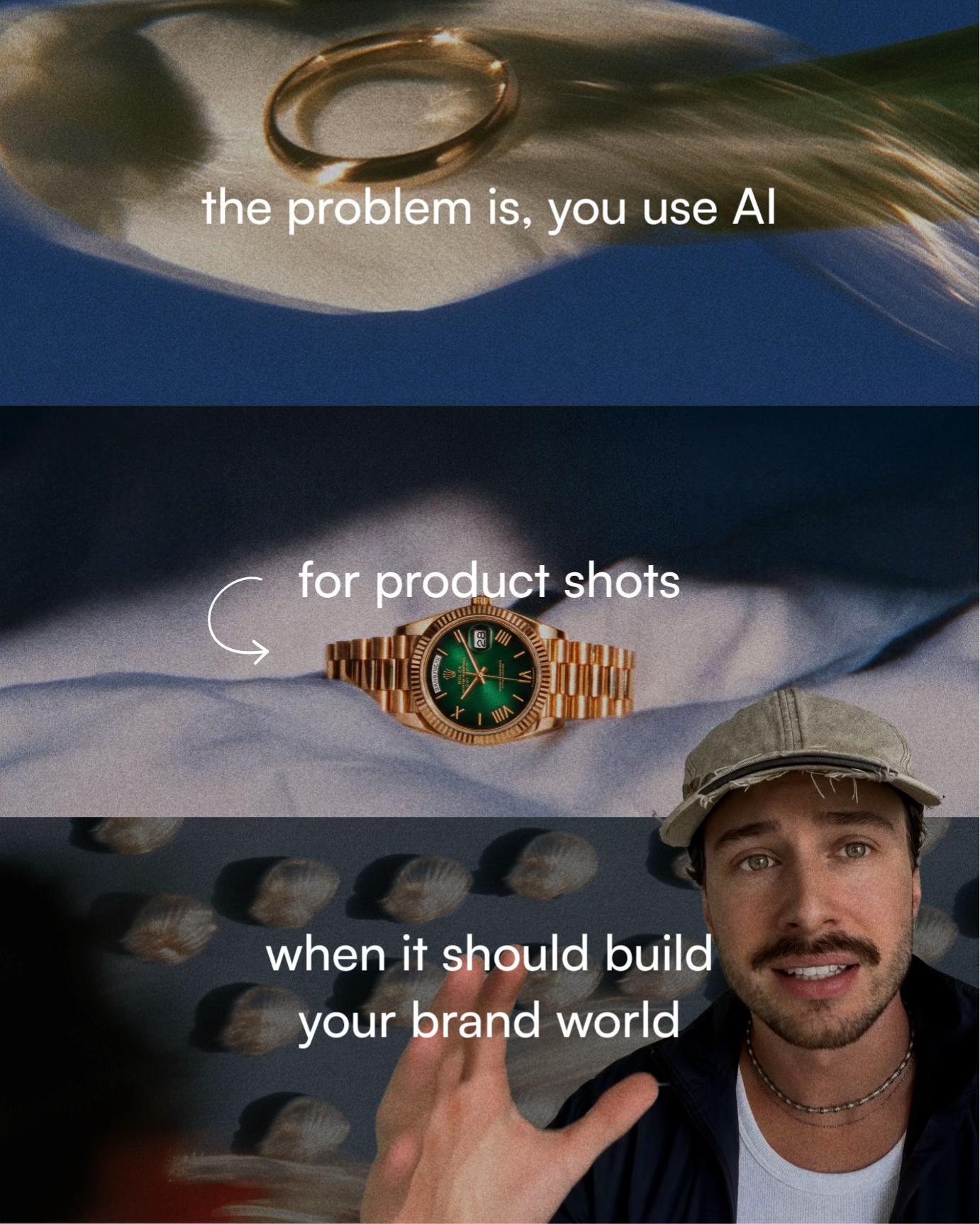
You brief someone on a product shot. They deliver it. It looks good. You brief another one. That looks good too. Six weeks later you have fifty images, each one technically competent, and none of them obviously related to each other. Different light. Different mood. Different implied world. A consumer scrolling your feed has no idea what they’re supposed to feel, because the visuals haven’t decided either.
This is the most common failure mode in AI-assisted creative work right now, and it has nothing to do with the quality of the images.
The consistency gap is a revenue problem, not an aesthetic one
The data on brand consistency is harder than most marketing claims. Brands with strict visual and messaging consistency report up to 33% higher revenue growth than those producing on the fly. 68% of companies say consistency contributed directly to revenue. These are not numbers about winning design awards. They are numbers about commercial outcomes.
The uncomfortable finding sits underneath those figures: 95% of companies have brand guidelines. Only around a quarter of them actually apply those guidelines consistently. Which means most brands already know what they’re supposed to look like. The failure is in the execution, not the strategy document.
AI does not automatically fix this. In some ways it makes it worse, because the speed makes it easier to generate volume without ever building the underlying system that would give that volume coherence.
What a visual system actually does
A single product image answers one question: what does this look like? It is useful. It is not enough.
A visual system answers a different question: why does this feel like it already belongs? When a consumer sees your fifteenth image, does it feel like it came from the same world as the first fourteen? Does the lighting logic carry? Does the colour relationship hold? Does the way objects are framed carry a consistent point of view?
“
Six weeks later you have fifty images, each one technically competent, and none of them obviously related to each other.
The output that compounds is not the prettiest image in the folder. It is the one that looks like it came from the same place as everything else you have ever posted.
Building that requires decisions made before the first image is generated:
What is the fixed visual logic of this brand? (Not a mood board. A set of rules that survive a change of subject matter.)
What constitutes an in-world colour, and what breaks it?
What does the implied space around the product say about who the product is for?
Where does this brand sit on the scale between editorial restraint and commercial directness?
These are not prompting questions. They are brand strategy questions. The prompts come after.
Speed is only useful when it’s pointed at a system
AI generation is fast. That is real. A competent AI creative can move through iterations at a pace that would have been impossible two years ago. But speed applied to a one-off produces one thing quickly. Speed applied to a system produces fifty things that work together.
The brands getting compound returns from AI creative work are not the ones generating the most images. They are the ones who invested in defining the system first, so that every generation decision is a reinforcement of the brand rather than a new negotiation with it.
That investment is front-loaded and it is worth making. The alternative is a folder that grows and a brand presence that doesn’t.